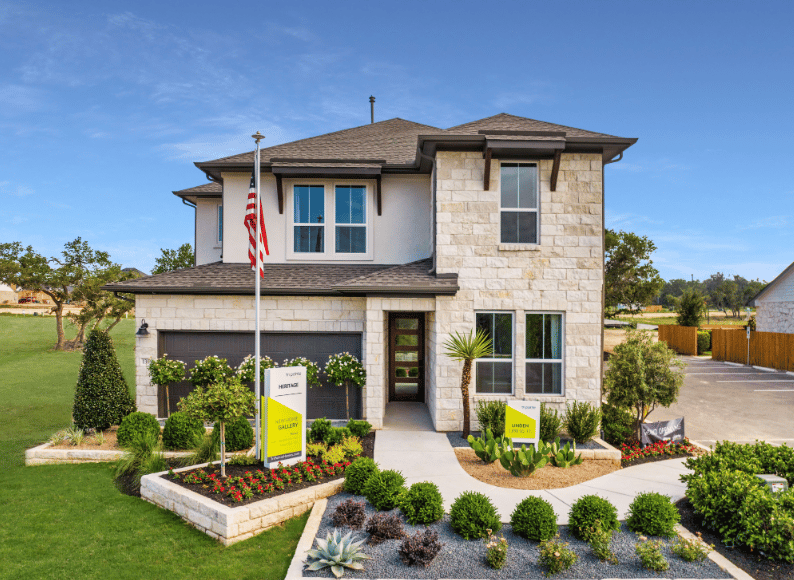
Heritage PID in Dripping Springs: What Buyers Should Know About the Cost
If you are considering a home in Heritage in Dripping Springs, the Public Improvement District assessment belongs in your budget from the beginning.
For a 40-foot lot classified as Lot Type 1 in Improvement Area #1, the 2026 service plan update lists a $40,102.32 principal assessment and a $3,296.97 annual installment due January 31, 2027. For budgeting, that installment works out to approximately $274.75 per month.
The same schedule projects $88,007.84 in total remaining installments through January 2053, including principal, interest, collection costs, and additional interest.
Those figures answer three different questions. The principal assessment is the remaining assessed principal. The annual installment is the scheduled yearly payment. The long-term total adds up projected payments over the remaining schedule. The $88,007.84 figure is not a lump sum due at closing or a current payoff quote.
As a Dripping Springs REALTOR®, I want buyers to understand those differences before choosing a home. Heritage may be a great fit, but the purchase price alone does not tell you what ownership will cost.
What is the Heritage Public Improvement District?
A Public Improvement District, commonly called a PID, is a defined area where assessments help fund public improvements benefiting the property within it.
The City of Dripping Springs created the Heritage PID on November 14, 2017. Its infrastructure financing was approved in stages for Improvement Areas #1, #2, #3A, and #3B. The assessment is tied to the property and helps repay the improvements financed for the district.
You can review the lot disclosures, assessment rolls, and installment schedules in the Heritage PID 2026 Annual Service Plan Update included in the City's public meeting materials.
For a buyer, the practical question is straightforward: What assessment applies to this specific property, and how does it affect my budget?
How much is the Heritage PID assessment?
There is no single assessment amount for every Heritage home. The applicable improvement area and lot classification matter, and a property's payment history or prior prepayment can change its remaining obligation.
The following figures reproduce the standard lot-type schedules in the 2026 update. Outstanding assessments are shown before the January 31, 2027 installment. They are a comparison reference, not a payoff quote for a particular address.
Lot type | Improvement area | Lot width | Principal assessment | Installment due Jan. 31, 2027 | Projected remaining installments |
|---|---|---|---|---|---|
1 | #1 | 40 ft | $40,102.32 | $3,296.97 | $88,007.84 |
2 | #1 | 45 ft | $41,925.15 | $3,446.83 | $92,008.19 |
3 | #1 | 50 ft | $45,570.81 | $3,746.56 | $100,008.91 |
4 | #2 | 35 ft | $39,160.60 | $3,090.98 | $85,500.89 |
5 | #2 | 40 ft | $41,025.39 | $3,238.17 | $89,572.36 |
6 | #2 | 45 ft | $42,890.18 | $3,385.36 | $93,643.83 |
7 | #2 | 50 ft | $46,619.76 | $3,679.74 | $101,786.77 |
8 | #3A | 40 ft | $41,728.53 | $3,382.64 | $96,384.29 |
9 | #3A | 45 ft | $43,625.28 | $3,536.40 | $100,765.40 |
10 | #3A | 50 ft | $47,418.78 | $3,843.91 | $109,527.60 |
11 | #3B | 35 ft | $39,820.62 | $3,232.37 | $91,799.09 |
12 | #3B | 45 ft | $43,613.06 | $3,540.21 | $100,541.86 |
13 | #3B | 50 ft | $47,405.50 | $3,848.06 | $109,284.63 |
Source: 2026 Annual Service Plan Update, assessment rolls and buyer-disclosure schedules. Projected installments are estimates and may change in annual updates. Prior prepayments and parcel-specific adjustments must be verified.
Across these standard schedules, the January 2027 installment ranges from approximately $3,091 to $3,848 annually, or $258 to $321 per month when divided by 12.
That monthly equivalent is a budgeting tool. It does not mean the PID itself bills you monthly. Ask your lender how the assessment will be handled in your payment and escrow estimate, and make sure it has not been omitted or counted twice.
Why two 40-foot lots can have different PID costs
Lot width alone does not identify the correct schedule.
40-foot lot | Principal assessment | Annual installment due Jan. 31, 2027 | Monthly budget equivalent | Scheduled final installment |
|---|---|---|---|---|
Area #1, Type 1 | $40,102.32 | $3,296.97 | $274.75 | January 2053 |
Area #2, Type 5 | $41,025.39 | $3,238.17 | $269.85 | January 2054 |
Area #3A, Type 8 | $41,728.53 | $3,382.64 | $281.89 | January 2055 |
The Area #1 and Area #3A principal balances differ by about $1,626, while their projected remaining installments differ by about $8,376. The financing terms and remaining repayment periods help explain that difference.
I would confirm the parcel ID, improvement area, and lot type against the assessment roll. A builder's collection name or a general description of the homesite is not enough to establish the amount owed.
Why is the projected total higher than the assessment balance?
Annual installments include more than principal repayment.
For Lot Type 1 in Improvement Area #1, the installment due January 31, 2027 breaks down as follows:
Component | Amount |
|---|---|
Principal | $716.75 |
Interest | $2,155.79 |
Annual collection costs | $223.92 |
Additional interest | $200.51 |
Total installment | $3,296.97 |
The update describes additional interest as funding a prepayment and delinquency reserve. Collection costs support district administration and related expenses.
Like other amortizing obligations, more of the early payment goes toward interest than principal. The schedule projects a changing mix over time, even though the total annual installment stays relatively similar.
The projected total is useful for understanding the financing structure. It does not mean a buyer who owns the home for five years will personally make every payment through 2053. Your actual costs depend on how long you own the property, whether you prepay, future annual updates, and the terms of a later sale.
Does the PID replace property taxes or HOA dues?
No. These are separate obligations, even when an assessment is collected through the same billing or escrow process as other charges.
When I compare homes with a buyer, I want the budget to account for:
- Mortgage principal and interest.
- Property taxes based on the applicable valuation and exemptions.
- Homeowners insurance and any mortgage insurance.
- HOA dues and other applicable association charges.
- The property's PID installment, if one remains payable.
- Maintenance, utilities, and other ownership expenses.
Ask your lender to identify exactly where the PID appears in the estimate. If it is already included in an escrow or tax-related total, adding it again would overstate your payment.
This is especially helpful when comparing Heritage with other Dripping Springs neighborhoods. A home without a PID may still have a higher total monthly cost because of its purchase price, tax burden, insurance, HOA dues, or maintenance needs.
Can you pay off the Heritage PID early?
The Heritage buyer disclosure states that the assessment may be paid in full at any time. The 2026 update also reflects properties with prepaid assessments.
Before deciding to pay it off, request a written payoff quote for the exact property and intended payment date. Do not assume the principal balance in a general table is the amount required to settle the obligation.
I would ask the administrator and title company to confirm:
- The current principal balance and total payoff amount.
- Any accrued interest, administrative costs, or already-billed installment treatment.
- Whether a partial prepayment is available and how it would affect future installments.
- How payment and satisfaction of the assessment will be documented.
- How your lender would adjust any applicable escrow collection afterward.
Whether prepayment makes sense depends on your cash reserves, financing, and goals. Have your lender and financial or tax adviser help evaluate that choice using a current quote.
What happens to the PID when you sell?
The assessment is tied to the property. Selling the home does not automatically erase an unpaid assessment, and a resale home within Heritage can still have a remaining PID obligation.
For a sale, confirm what remains outstanding, whether either party will pay it off, how the current installment will be allocated, and what the purchase contract requires. The title company and administrator should verify the figures used at closing.
For buyers, this creates another useful question: Has the seller already prepaid any or all of this home's assessment?
Two otherwise similar Heritage homes may not have the same remaining PID cost.
What I would review before buying a Heritage home
I want the PID review to happen while you are evaluating the home and preparing the offer.
My checklist would include:
- Identify the parcel. Match the property to the assessment roll and correct lot classification.
- Read the disclosure and attached schedule. Separate assessed principal, annual installment, and projected remaining payments.
- Confirm payment history. Check for prepayments, unpaid installments, or adjustments.
- Get a complete payment estimate. Have the lender account for the PID once, alongside taxes, insurance, and financing.
- Clarify any builder or seller offer. Get written terms explaining whether an incentive actually pays down the PID or covers a different expense.
- Review closing treatment. Confirm any payoff, installment allocation, and required documentation with the title company.
Texas has specific PID disclosure requirements. The City's update includes buyer notices and closing-recording language referencing the Texas Property Code. Ask your agent and title company to provide the applicable notice early, and involve a Texas real estate attorney if a disclosure or contract issue arises.
If you are still narrowing your search, my guide to comparing Big Sky Ranch, Cannon Ranch, and Heritage provides a broader starting point.
Common questions about Heritage PID fees
Is every Heritage PID payment the same?
No. Improvement area, lot classification, and parcel-specific payment history matter. Verify the current assessment for the address you are considering.
Will the annual installment stay fixed?
Do not treat the projected schedule as a guarantee. Its footnotes explain that annual updates can increase or decrease amounts as collection costs, reserves, interest earnings, and other offsets change.
Does the PID disappear when I pay off my mortgage?
Paying off your mortgage does not by itself pay off a separate PID assessment. Confirm both obligations independently.
Does a resale home in Heritage still have a PID?
It can. Check the parcel's remaining assessment and any prepayment history rather than assuming the obligation applies only to new construction.
Should a PID stop me from buying in Heritage?
I would evaluate the complete purchase. The home, location, price, financing, amenities, and ongoing costs all matter. A clearly understood PID can be included in that comparison so you can decide whether the home fits comfortably.
Considering a home in Heritage?
Send me the address of the Heritage home you are considering and any other home you want to compare. I can help identify the applicable PID schedule and work with your lender and title company to build a clearer picture of the ownership costs before you commit.
For more about the community, explore my Heritage neighborhood guide, or start a conversation with me.
Kent Broom | Dripping Springs REALTOR®
Magnolia Realty Austin | Hill Country
📞 214.995.6397
📧 [email protected]
🌐 KentBroomDrippingSprings.com
General educational information, not legal, tax, or financial advice. Figures are based on the August 18, 2026 service plan update available in the City's public meeting materials and may change. Confirm the current assessment, installment, and payoff information for your specific property before relying on an estimate.